
While being meat eaters, Doug and I love this mung soup – and I’m sure you will too when you feel the nourishment this soup offers…
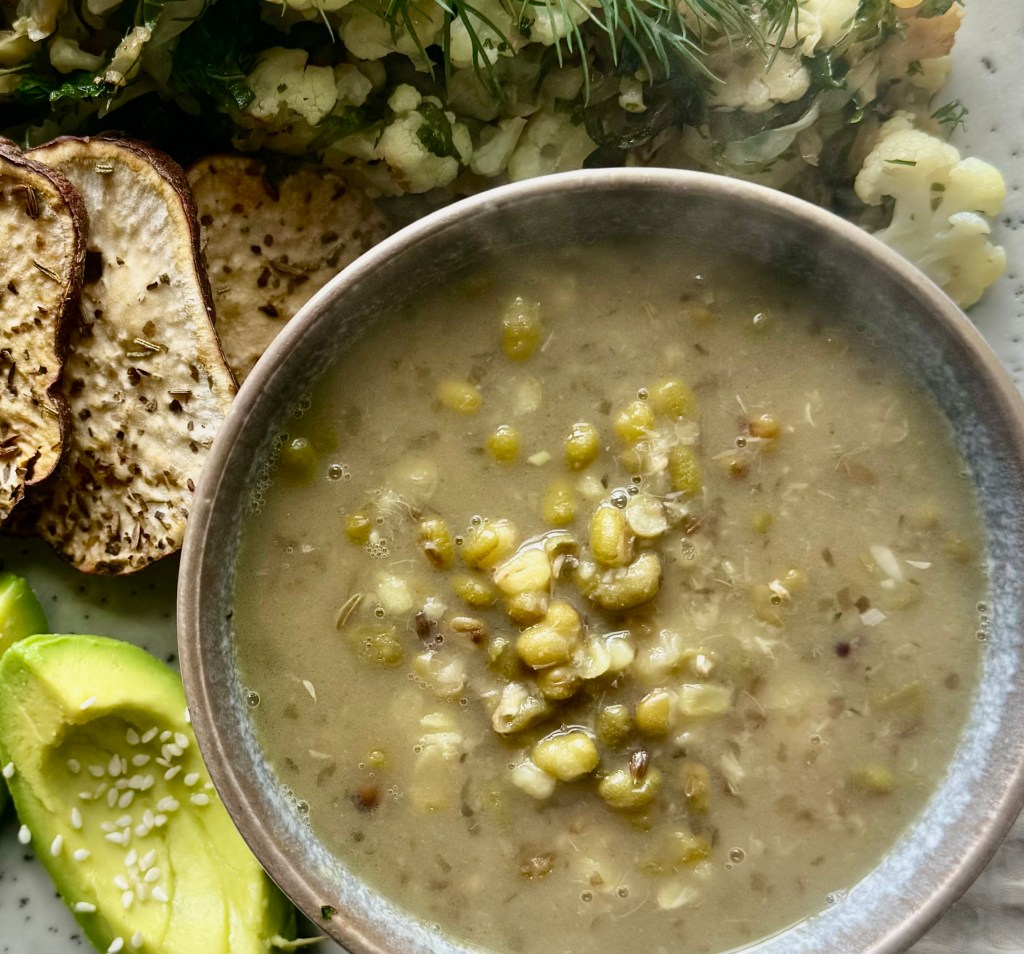
I have talked about the benefits of mung beans in other posts, and if you’d like to read up more here’s a nice post from Joyful Belly on the benefits of mung beans. They certainly are a staple in our household and for good reason. It’s the legume to come back to when you’ve had too many meals out, or feeling like your digestion needs some care because of its ease on digestion. I also like to call it the bang-for-buck bean, because in a nutshell (as discussed in Joyful Belly), it is the easiest legume to digest (when prepared and cooked properly) and offers the most nutrition. Digestion is the key here, there are many amazing nutrient dense foods out there but if you aren’t able to digest them properly (meaning assimilate and absorb them properly) then it doesn’t matter if you’re eating brownies or carrots – whatever you absorb is what’s going to be circulating through your blood.
So this is a simple mung bean soup which maximises absorption. It can be paired with a grain to create a whole protein – also known as kitchari (which I will post about another day) but it can also be eaten as a soup with rice on the side, a very nice comforting and easily digestible meal. There are a few guidelines when cooking legumes to maximise digestibility.
A: Soak before cook
B: Cook until they are almost mush – well cooked is easier to digest
C: Cooked with fat, salt and spices maximises digestion
D: Consistency matters – see what you feel like – usually if digestion is weak, you will prefer a thinner soup, or if its a cold day and you’re ravenous, then a slightly thicker soup will probably be more desirable.
The types of spices also depends on what your digestion feels like and what the weathers doing, how you feel etc. For example if it’s a really hot day when digestion is typically feeling a little weaker, a soupier version with more cooling spices would be more desirable. If its a cold day, and you could eat a whole 10 boxes of Fererro Rocher’s, then you might like to add heating spices like cinnamon, ginger and hing (asafoetida) balancing with fresh coriander garnish to counter the heating spices. So use your discretion, trust your intuition and see how you feel after eating it. Over time you develop a trust for your intuition around foods and cooking.
In my experience, the best way to cook mung beans, or any type of legume, or even grains or slow cooked meats – the options are endless – is by using a pressure cooker. I use mine at least two or three times every day. If you have not yet got yourself a pressure cooker, do yourself a favour! You can set it to start at a later time that suits you (like just before you come home from your day out) different settings for different cooking methods, from sauté, to rice, soups, slow cooker and of course pressure cooker which cooks in speedy time. Here’s the one I have, its a 3L which suits cooking for the two of use, and it might be worth getting the more durable stainless steel insert over the non-stick. Find the Instapot pressure cooker here.
So here is a basic recipe that I’ve adapted with gratitude from a recipe from my Ayurvedic Practitioners teachers who live in India. You can spice this up or down to your liking!
Simple Mung Bean Soup
Serves 4
Ingredients
1 cup whole mung beans washed and soaked overnight (or 6 hrs minimum)
1 tablespoons ghee
1 small onion if desired
1 clove garlic if desired
1 tsp Cumin seeds
1 tsp fresh grated ginger
1 tsp fresh grated turmeric
1/2 tsp mustard seeds
pinch asafoetida
Salt – about 1 tsp or to taste
Fresh Corriander & Lime for garnish
Pressure Cooker Method
- Set pressure cooker to Pressure Cooker setting, for 18 minutes and allow to warm.
- Add ghee and allow to melt, and add onion, garlic, cumin, ginger, turmeric, mustard, asafoetida and salt and sauté a few minutes until the onion becomes translucent and fragrant.
- Rinse and drain soaked mung beans and add to your Instapot, stir through the spices and cook for 1 minute.
- Add in enough water to cover the beans by about 2cm, or more or less if you want a thicker/thinner consistency (water can be also added at the end if thinner is desired)
- Secure the lid according to manufacturer instructions, and enjoy your spare time (washing up, preparing rice, resting etc).
- Once finished, safely release pressure according to manufacturer instructions (I usually cover the valve with a tea towel to reduce steam emissions).
- Stir, check and alter consistency as desired, and serve with freshly chopped corriander and lime and your desired grains and veggies.
- Enjoy!
Stove Top Method:
- In a medium saucepan, heat ghee on medium heat and add onion, garlic, cumin, ginger, turmeric, mustard, asafoetida and salt and sauté a few minutes until the onion becomes translucent and fragrant.
- Rinse and drain soaked mung beans and add to your pot, stir through the spices and cook for 1 minute.
- Add in enough water to cover the beans by about 2cm, or more or less if you want a thicker/thinner consistency (water can be also added at the end if thinner is desired)
- Gently simmer under a cracked lid for about 30 to 45 minutes or until very soft. May need to stir and check periodically if more water is needed.
- Garnish with freshly chopped Corriander, a small squeeze of lime and enjoy with rice – or your desired grain and veggies of choice. It also goes very nicely with a chappati.
Bon Apetite!
As an Amazon Associate, I earn from qualifying purchases. If you decide to make a purchase through my affiliate link, I will earn a small commission at no extra cost to you, and I thank you kindly for your support 💕
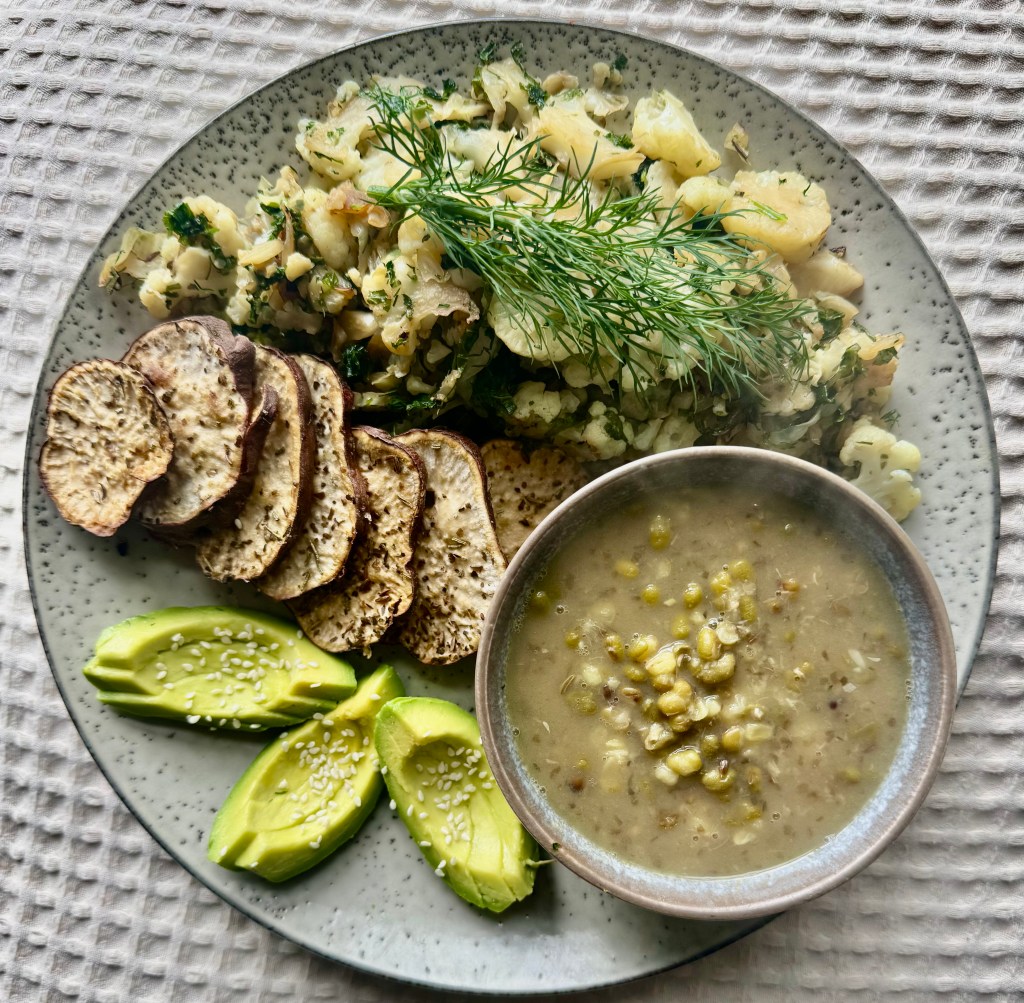
Enjoy this deliciously nourishing meal, and as always use your discretion with what combinations of spices suits your unique needs.
All my love
✨🧡✨🫘
 Dougs Dinners
Leave a comment